
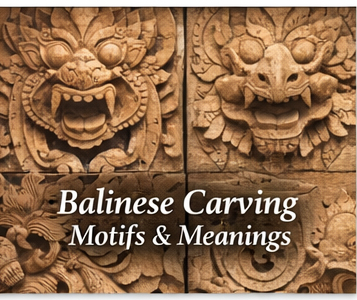
Balinese wood carving is more than decorative art. Many traditional carvings feature motifs inspired by nature, mythology, architecture, and the spiritual traditions of Bali. These motifs give each piece its own visual character and cultural meaning.
Floral and Plant Motifs
Floral and plant-inspired ornaments are among the most recognizable elements in Balinese decorative art. Flowing leaves, flowers, vines, and ornamental patterns are often arranged in balanced compositions that reflect the beauty and richness of nature.
These motifs are commonly found in traditional Balinese wood carvings, architectural decorations, panels, and other handcrafted artworks. Their intricate lines and repeating forms also demonstrate the patience and precision required from the artisan.
Mythical Creatures
Balinese carving traditions include many mythical and symbolic figures. Creatures such as Barong, Rangda, and other traditional characters can represent protection, spiritual strength, balance, and stories that have been passed down through generations.
Traditional masks and sculptures featuring these figures are not simply decorative objects. Their expressive forms and detailed ornaments reflect the artistic traditions and cultural identity of Bali.
Religious and Spiritual Symbols
Religious and spiritual themes are also an important part of Balinese art. Figures associated with Hindu traditions, deities, sacred characters, and symbolic ornaments can be found in many forms of traditional artwork.
For example, representations of Saraswati are associated with knowledge, wisdom, learning, music, and the arts. Other traditional figures may express ideas of protection, compassion, strength, or spiritual balance.
Patra Bali and Traditional Ornamentation
Patra Bali is a distinctive ornamental style characterized by flowing floral and foliage patterns. It is widely associated with Balinese architecture and decorative arts and can be seen in carved wood, stone, doors, panels, and other traditional elements.
The detailed curves and interconnected forms of Patra Bali require careful carving and a strong understanding of composition. These decorative patterns can transform a simple wooden surface into an intricate work of art.
The Meaning Behind the Craft
The meaning of a Balinese wood carving often depends on its subject, motif, and cultural context. Some pieces are created primarily as decorative artwork, while others are inspired by traditional stories, religious beliefs, or symbolic themes.
This combination of visual beauty and cultural inspiration is one reason authentic Balinese wood carving continues to attract collectors and art lovers around the world.
At Tirtha Wangi, we continue to create and preserve the tradition of handcrafted Balinese wood art. Each piece reflects the creativity, skill, and dedication of the artisan while carrying the distinctive character of Balinese craftsmanship.